/ Kunel in dialogue with Selin & Eylül /
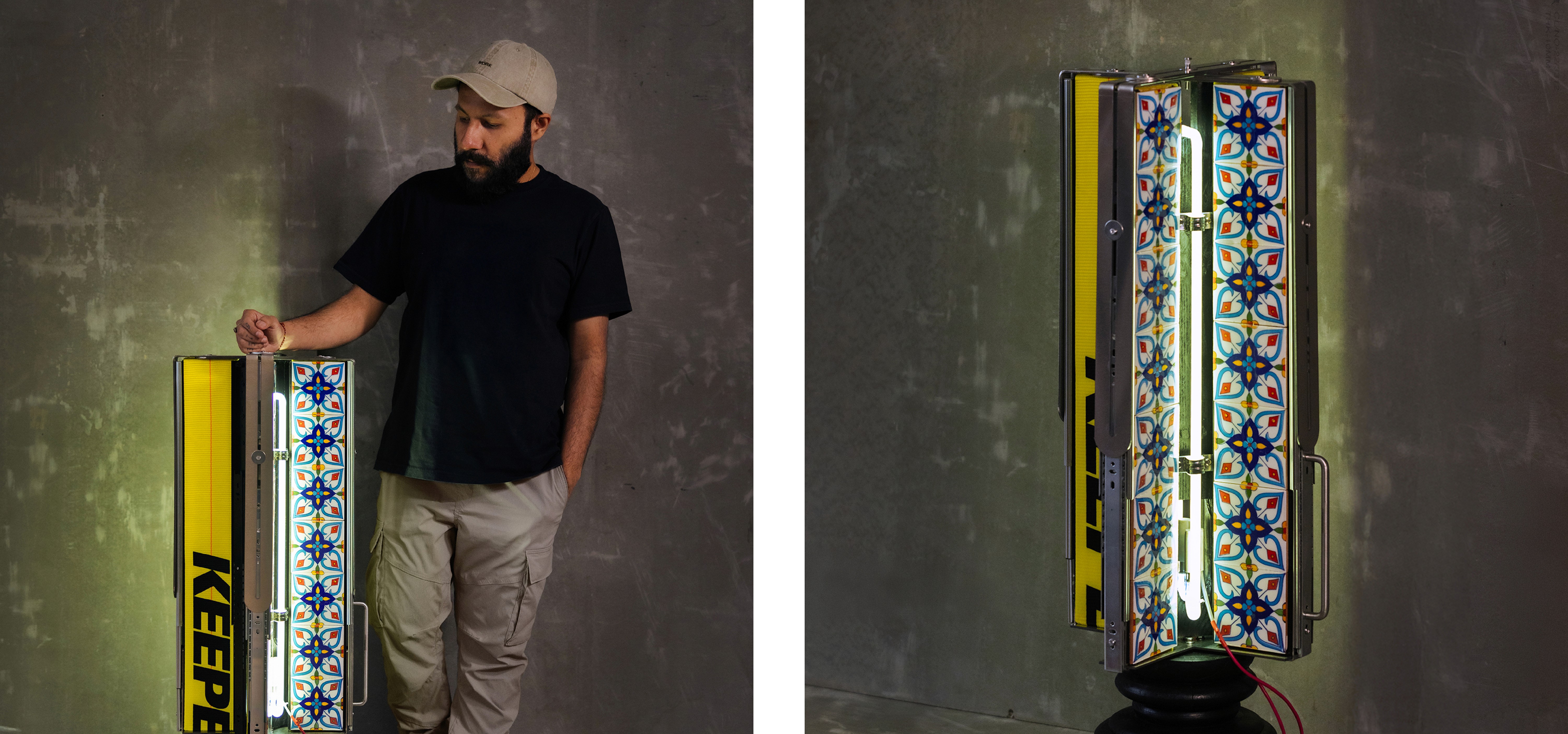
Kunel Gaur is a multidisciplinary artist whose practice moves at the intersection of engineered form, visual systems, and contemporary material culture. Rooted in a background in graphic design and architectural sensibility, his work draws from the coded languages of mass production, typography, industrial signage, packaging, mechanical components. and repositions them as sites of emotional, cultural, and perceptual inquiry.
Working across assemblage, interface-based portraiture, sculptural studies, and serial formats, Gaur constructs compositions in which colour, structure, and lived experience meet without fully merging. His works often stage encounters between softness and precision, memory and mechanism, ornament and system, revealing how human presence moves through the designed world.
Gaur’s practice is informed by street visual culture, functional design, Japanese graphic traditions, and the shifting aesthetics of contemporary urban life. Through these influences, he builds a vocabulary that is both exacting and sensorial, exploring the tension between what is felt and what is engineered.
He has exhibited widely across India and internationally, including presentations in New York, Toronto, and multiple solo exhibitions at Method. Gaur continues to expand a visual language that locates meaning within the structures, codes, and material systems that shape modern experience.
Hi Kunel, thanks for being part of this. What have you been up to lately?
Lately most of my time has been spent setting up a new studio after moving to a new place. Rebuilding a workspace always feels like resetting the operating system of my practice. Figuring out where the tools live, where materials stack, where thinking happens. At the same time I have been reflecting on my recent trip to India and the show there. Being around the work in a different context always changes how I see it. That trip left me with a lot of energy and clarity for the projects I want to start this year.
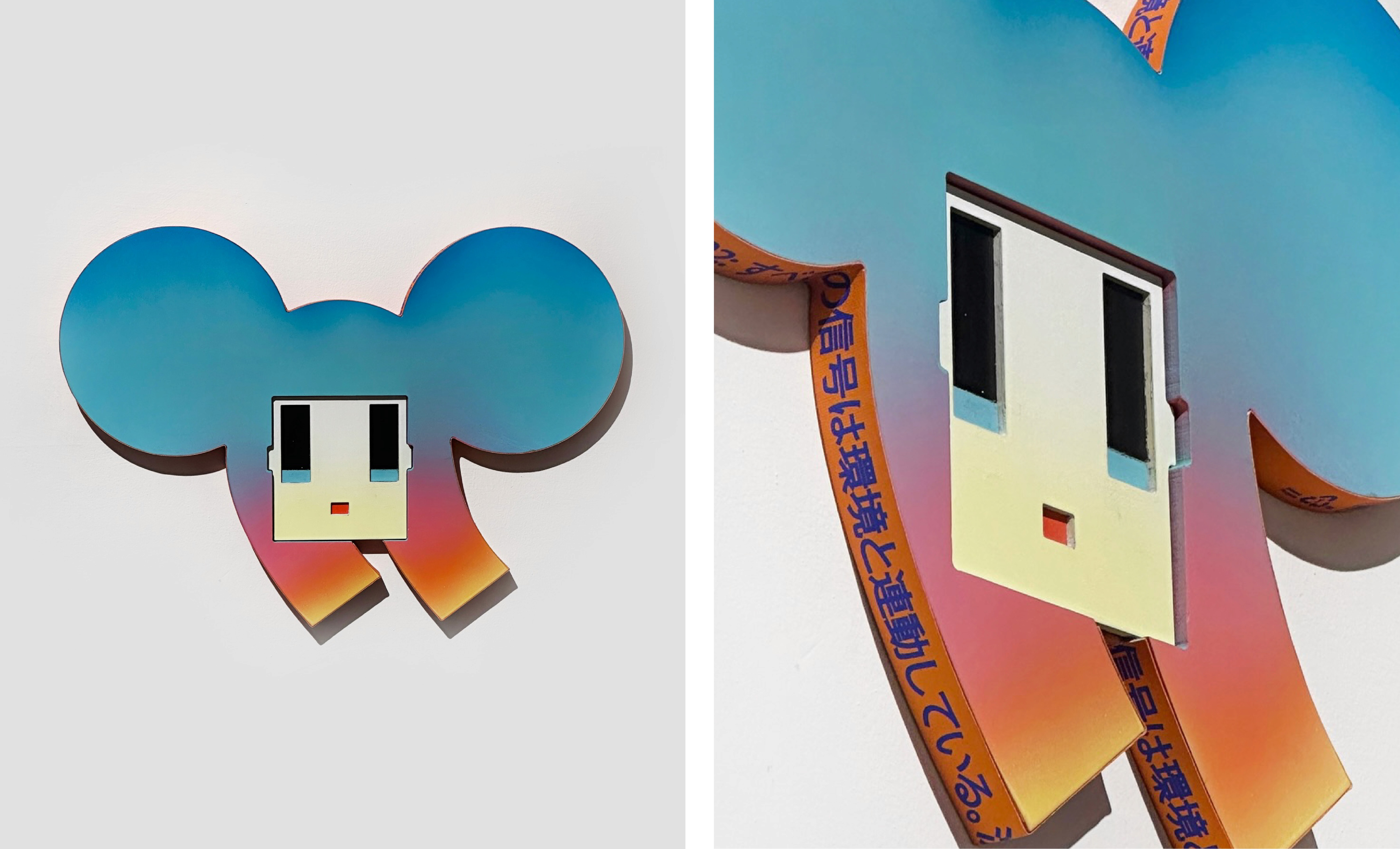
KUMI 404 (2025) / Acrylic, pigment, canvas and wood. 21 x 15 inches
Before we get into the work, what does a typical day look like for you right now?
Right now my days are split between slow thinking and practical making. Mornings usually start quietly with coffee and calls with the design team at Animal. And afternoons mostly spent in the studio, setting it up for the new work. I like that rhythm. I am also currently working on multiple projects that I will be unveiling this year and so a lot of evenings are spent with people ideating on that, sourcing material, calls with vendors and so on.
Your work feels very precise, almost engineered, but there’s something emotional sitting underneath all that structure. Do you feel like you’re someone who thinks in systems, or in feelings?
Probably systems first, but feelings arrive through them. I am interested in how emotional meaning can emerge from structured arrangements of objects and materials. Hardware, gradients, and mechanical parts carry a kind of logic. But when you remove their function and place them in a new relationship, something more human appears. So the structure is deliberate, but what it produces emotionally is often slightly unpredictable.
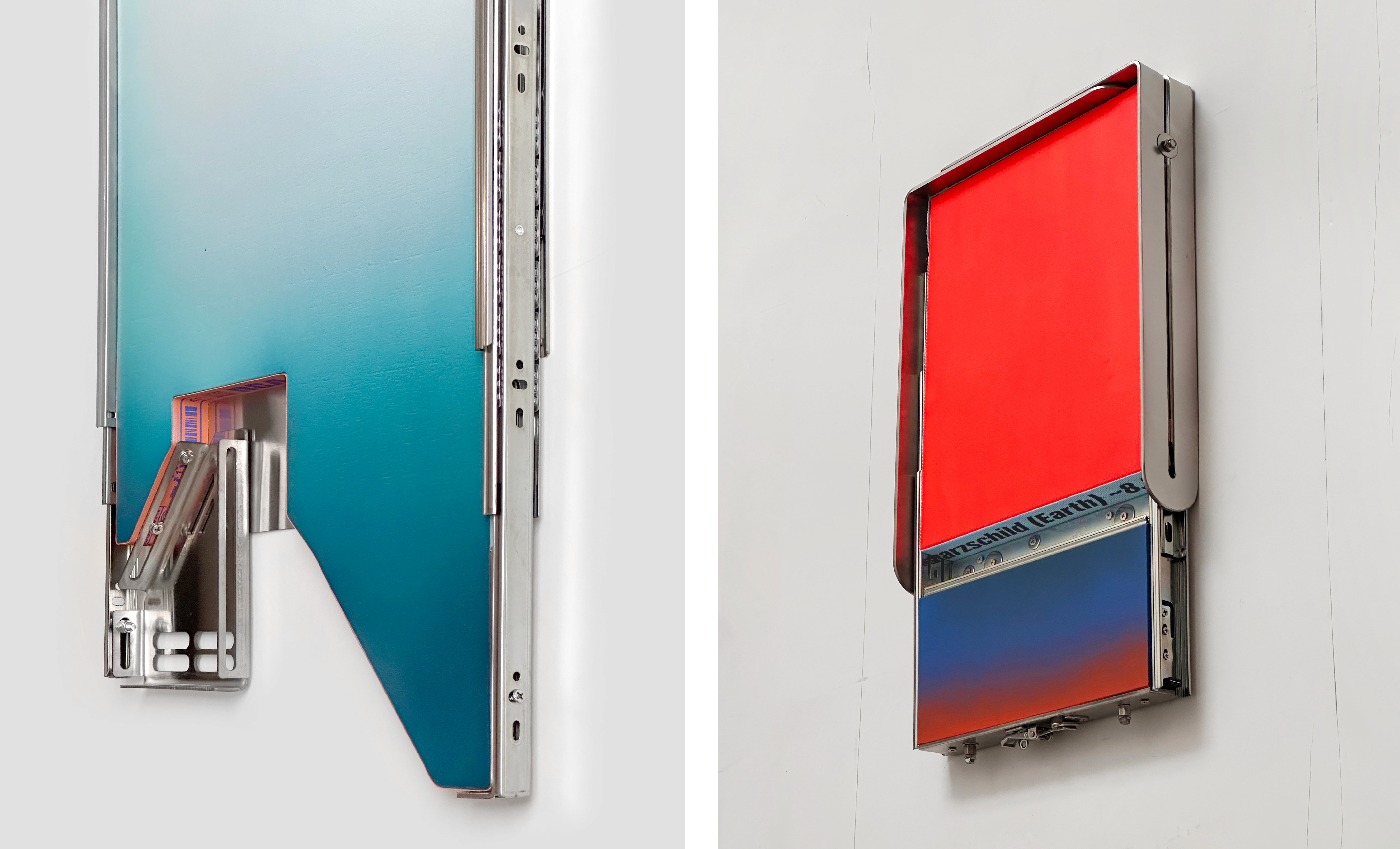
(Left) Stoichiometric Blue (2025) / Stainless steel, acrylic, pigment, canvas and wood. 15 x 24 inches (Wt. 11.5 lbs)
(Right) Redshifted Beyond Recognition, (2025) / 304 stainless steel, wood, aluminium, aerosol, nylon, steel latch, and drawer slides, 25.5×12×2.5in / 64.8×30.5×6.4cm
There’s this interesting tension in your work - objects that look functional but aren’t really meant to function anymore. What draws you to that in-between space?
Function is a very strong narrative. The moment we recognize an object we assume what it should do. I like interrupting that expectation. When an object is removed from its system it does not become useless. It simply loses the instructions that normally explain it. What remains is the object itself. Its material, its geometry, its presence.
You reconstruct, reassemble, reframe… Is this process for you a critique or maybe a kind of translation?
Translation feels closer. I am not necessarily criticizing the objects or systems themselves. I am more interested in translating them from one language to another. From industrial function to visual or philosophical presence. When an object moves from the world of utility into the world of art, its role shifts and it begins to speak differently.
Are you someone who plans everything, or does the material ever surprise you?
Both happen. The conceptual structure is usually quite planned. The geometry, the relationships between elements, the overall system. But materials always have their own behavior. Metal, ceramic, and acrylic all respond differently to tension, weight, and light. Sometimes the most interesting moments appear when the material slightly resists the plan. The idea I begin with is usually very different from what the work eventually becomes.
You run a creative agency alongside your artistic practice. How do those two worlds coexist for you?
They operate at different speeds. Animals are collaborative, strategic, and outward facing. It is about solving communication problems for brands. My studio practice is slower and more introspective. But they feed each other in unexpected ways. Design sharpens my sense of structure and clarity, while art allows me to explore ideas without needing a brief or a defined outcome. It’s an interesting mix of energies and I would never have it any other way.
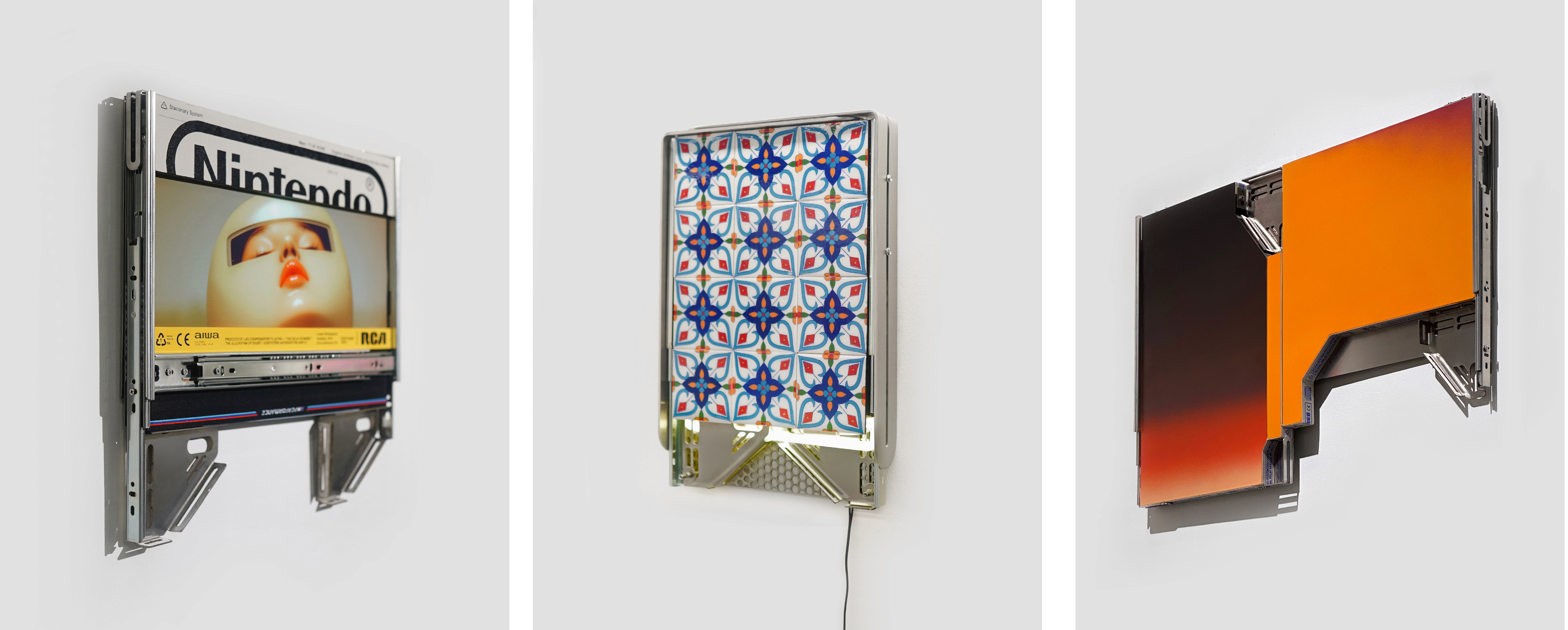
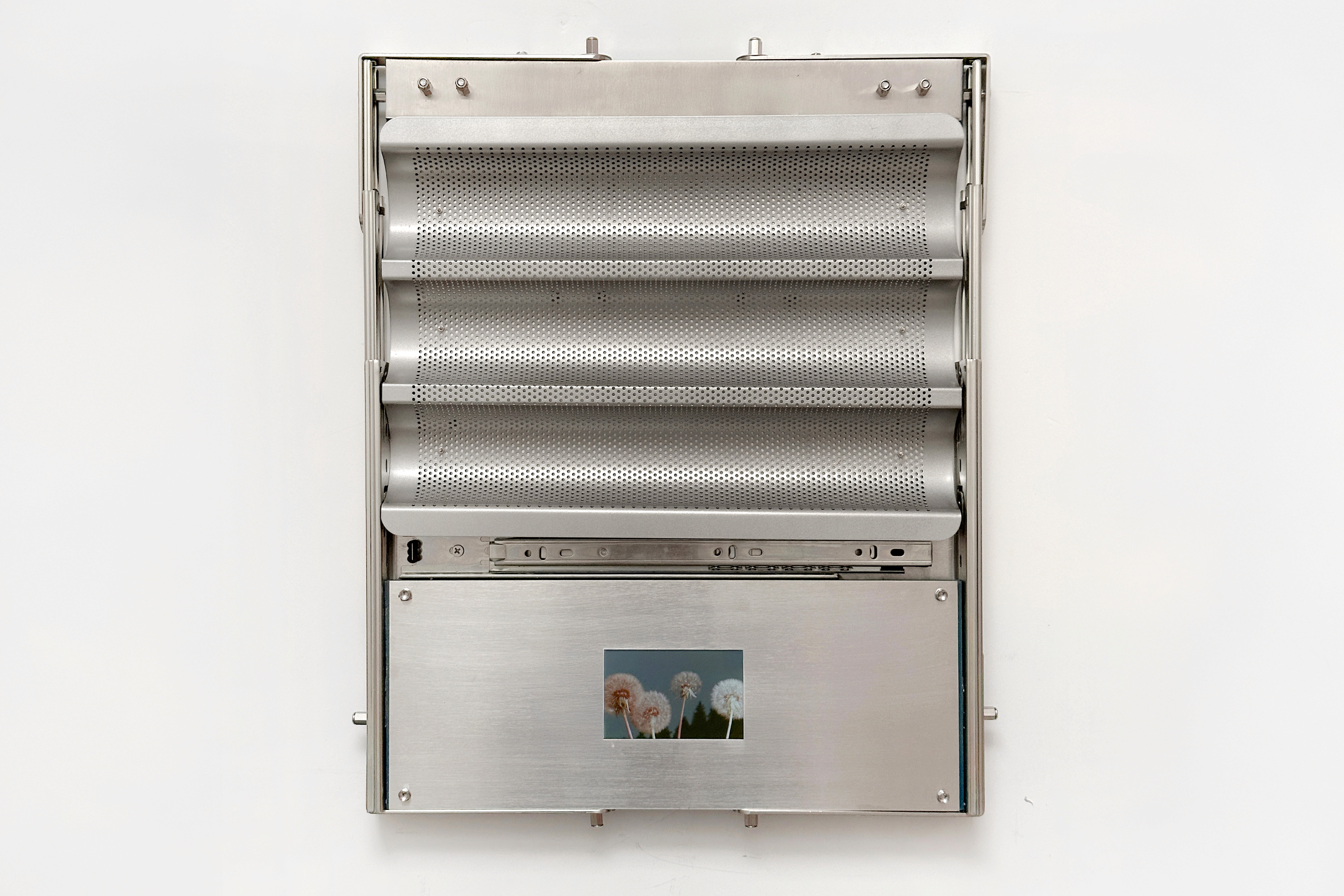
(Left) Licensed Lucidity (2025) / 304 Stainless steel, acrylic, pigment, canvas, car seat belt, steel saw blade, hardware and wood. W 19 x H 17.5 inches
(Middle) Astraform At Rest (2025) / 304 Stainless steel, ceramic tiles, acrylic, cold cathode, hardware and wood. W 13.5 x H 20 x D 2.5 inches
(Right) Ferric Saffron Accord (2025) / Stainless steel, acrylic and wood.
Does the pace or visual culture around you influence your work? When you walk through a city, what catches your eye first?
Usually the unnoticed details. Industrial hardware, signage systems, construction materials, and packaging graphics. The functional layer of the city. Those objects are designed for efficiency rather than contemplation. But when you isolate them they start to reveal an interesting aesthetic logic. Cities are full of accidental compositions.
What does your studio look like right now?
At the moment it is somewhere between a workshop and a storage archive. Since I am setting up the space again, the materials are everywhere. Hardware, the ceramic tiles I have collected, found printed media, metal parts, canvases, and tools. I actually like this phase. It is a bit chaotic but it also means new combinations are constantly appearing in front of you.
When you’re not working, what helps you reset?
Walking helps a lot. It is simple but it clears the mental noise. I also like observing ordinary spaces such as shops, hardware stores, and industrial areas. Those environments are strangely calming because everything has a clear function. It is a very different visual language from the art world.
And lastly, what are you dreaming of these days?
Right now I am thinking about expanding the language of the work. New material combinations, larger spatial pieces, and continuing series like Cimenti and Signs of Life. But quietly I am also dreaming of a better world. One that may exist somewhere outside the human experience. That thought often brings me back to writing, because writing allows me to stay in that dream a little longer. I am also producing some new work with my writing this year.
Kunel’s List
Favorite museum, bookstore or local spot?
The Home Depot
The last book you read?
The Beginning Of Infinity by David Deutsch
Something in your studio right now that feels important?
The equipment
A tool you can’t live without?
My DeWalt drill/Jigsaw/screwdriver set
VIEW ALL DIALOGUE